
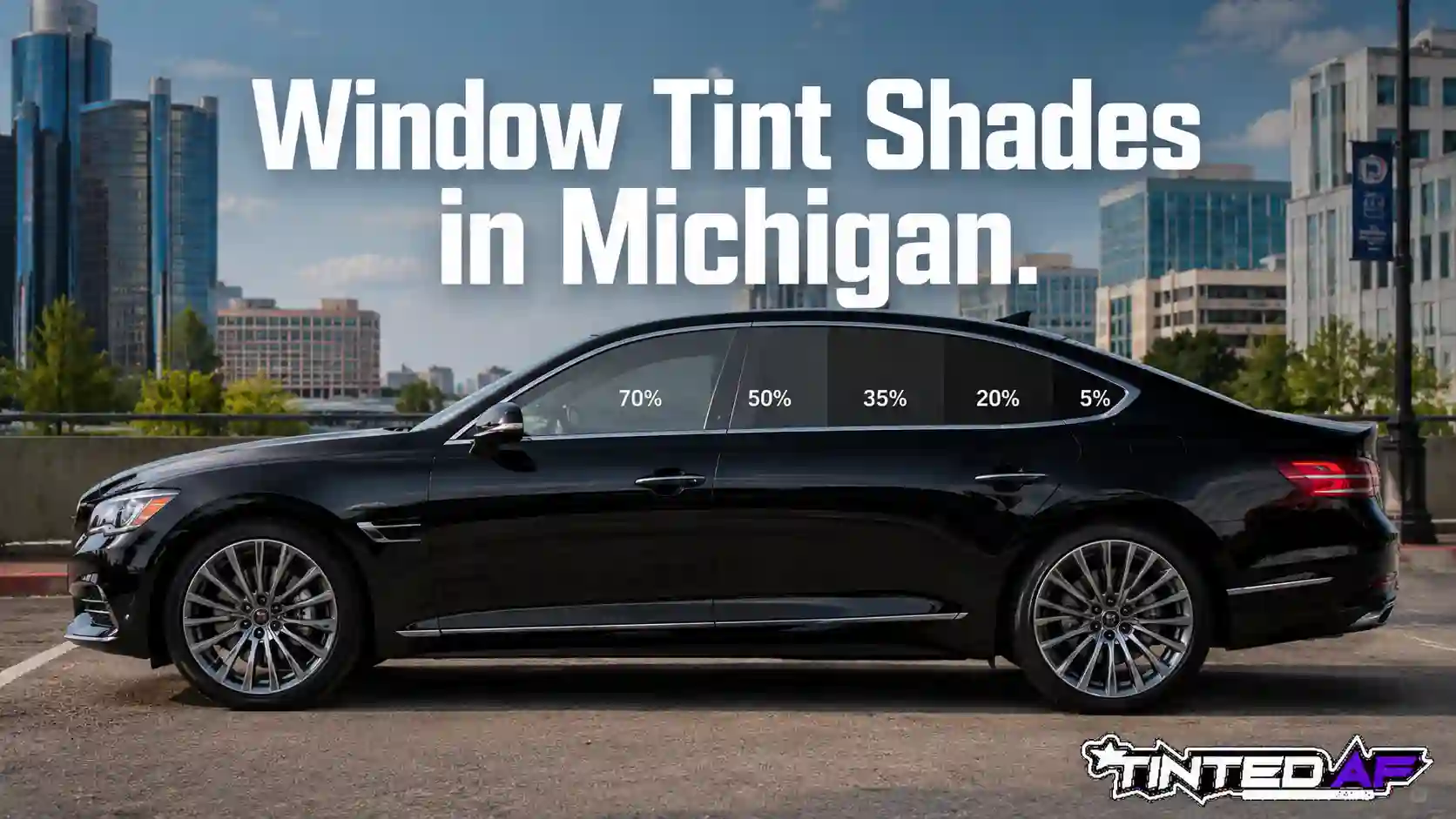
Window tint shades range from nearly clear film to very dark 5% tint. Each percentage changes privacy, appearance, glare, and nighttime visibility. However, darkness alone does not determine heat or ultraviolet protection.
TintedAF offers automotive window tint services in Michigan using ceramic and carbon films. This guide explains the window tint scale, common percentages, finished VLT, factory glass, and practical shade selection.
Which Window Tint Shade Should You Choose?
No single percentage works best for every vehicle. A lighter shade supports outward visibility and a subtle appearance. A darker shade creates more daytime privacy but reduces available light inside the cabin.
For many daily drivers, 35% offers a moderate appearance. A 20% shade creates stronger privacy, while 50% remains lighter and less noticeable. Very dark 5% film requires careful consideration because nighttime visibility can become difficult.
Legal requirements come first. The allowed film depends on the state, window position, vehicle class, reflectivity, and existing glass. A professional meter provides more reliable guidance than an online photograph.
What Does Window Tint Percentage Mean?
Window tint percentage describes Visible Light Transmission, commonly called VLT. It measures how much visible light passes through the glass and film. A higher percentage allows more visible light through.
A 70% film looks lighter because it transmits about 70% of visible light under test conditions. A 20% film transmits about 20%. A 5% film allows very little visible light through.
The percentage does not measure privacy, UV rejection, or total solar heat by itself. Those results depend on film construction, glass, lighting, and the completed installation.
How Is Window Tint Measured?
A tint meter measures visible light passing through the completed window. The result includes both factory glass and installed film. It may differ from the percentage printed on the film box.
The vehicle protection specialists at TintedAF can meter existing glass before discussing shades. This step identifies factory tint, previous film, and the starting VLT for each window.
Meters should be clean, calibrated, and used according to their instructions. Window contamination and unusual glass can affect a reading. Completed measurements matter most when laws regulate finished VLT.
Window Tint Shade and VLT Comparison Chart
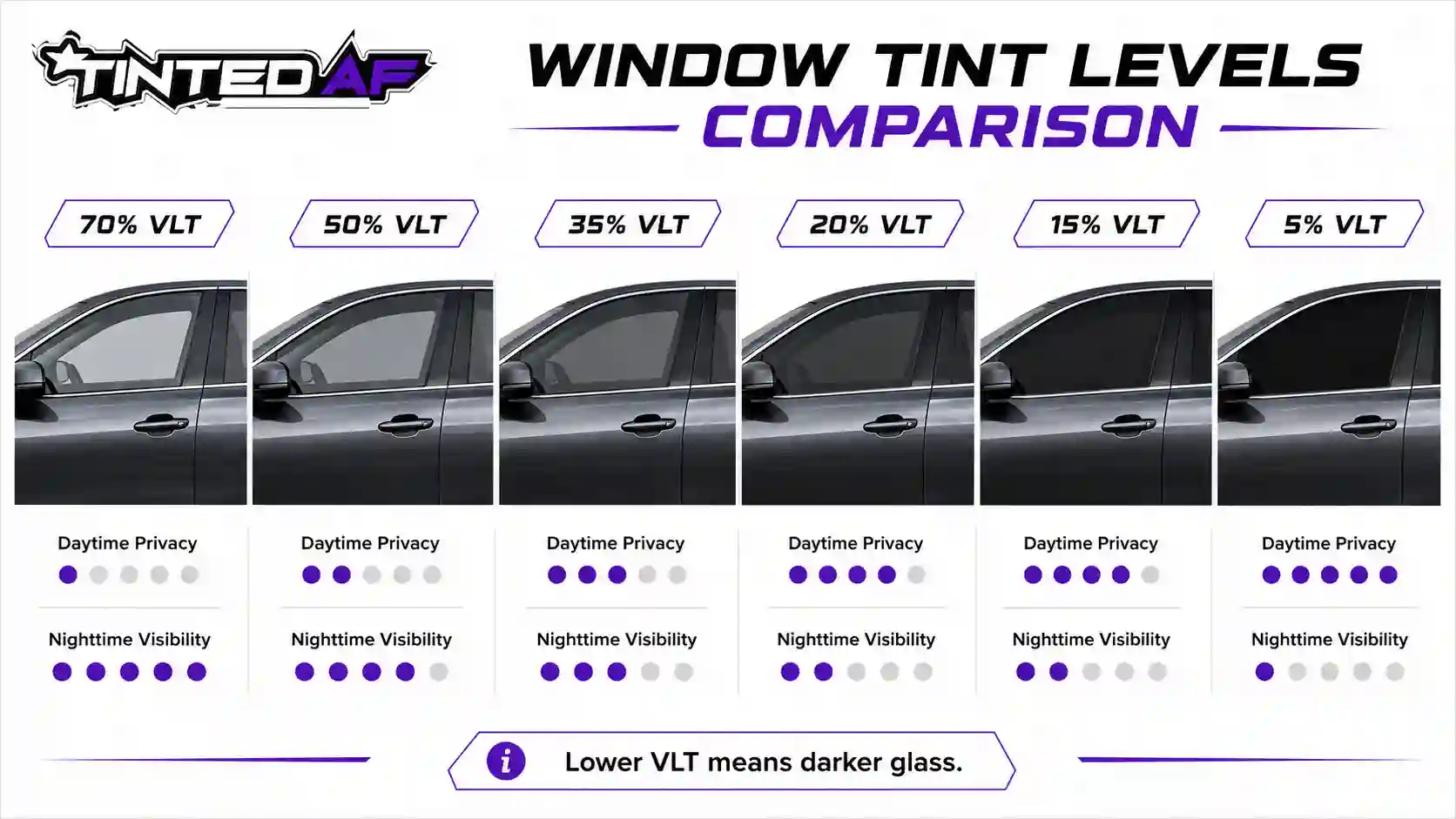
This window tint scale gives a practical comparison. Appearance can change with sunlight, interior color, glass angle, and camera exposure.
| VLT | General Appearance | Daytime Privacy | Nighttime Outward Visibility | Common Selection Goal |
| 70% | Nearly clear | Very low | Very strong | Minimal appearance change |
| 50% | Light smoke | Low | Strong | Subtle shade and glare control |
| 35% | Moderate shade | Moderate | Good | Balanced daily-driver appearance |
| 20% | Dark | Strong | Reduced | Greater daytime privacy |
| 15% | Very dark | Very strong | Limited | Privacy-focused rear glass |
| 5% | Limo dark | Maximum | Poor | Specialized use where lawful |
This chart describes relative appearance, not universal legal choices. Film construction determines much of the heat and UV performance.
What Does Each Window Tint Percentage Look Like?
70% VLT: Nearly Clear
Seventy percent tint creates little visible darkening on clear glass. It offers minimal privacy but preserves strong outward visibility. The completed window may meter lower because factory glass already reduces some visible light.
50% VLT: Light Shade
Fifty percent tint adds a mild smoked appearance without making the cabin look heavily darkened. It suits drivers seeking subtle styling, glare control, and good nighttime visibility.
35% VLT: Moderate Shade
Thirty-five percent tint creates an obvious but moderate shade. Occupants may remain visible in direct sunlight. Privacy increases in shade, cloudy weather, or with a dark cabin interior.
20% VLT: Dark Shade
Twenty percent tint looks clearly dark from outside and provides strong daytime privacy. Outward visibility decreases at night, especially on unlit roads, during rain, and inside parking structures.
15% VLT: Very Dark Shade
Fifteen percent tint lets limited interior detail remain visible from outside in bright conditions. It provides more privacy than 20% but creates a larger low-light visibility tradeoff.
5% VLT: Limo Dark
Five percent tint appears nearly opaque from outside under many conditions. It sharply reduces nighttime outward visibility. This shade requires careful legal and practical review before installation.
How Do Tint Shades Look from Inside and Outside?
Tint appearance changes with the direction of light. During a bright day, outside light reflects from the glass. A darker cabin then becomes difficult to see from the street.
At night, interior lights can reveal occupants through dark film. Meanwhile, the driver has less outside light available. A shade that seems comfortable during daylight can feel much darker on an unlit road.
Photographs can mislead because cameras change exposure automatically. Useful comparisons require the same vehicle, film, lighting, angle, and camera settings. Physical samples on the actual glass provide better evidence.
How Does Window Tint Affect Nighttime Visibility?
Lower VLT means less visible light reaches the driver’s eyes. This difference matters more in rain, snow, fog, rural driving, and parking maneuvers.
Headlights illuminate the forward road but may not brighten side areas. Very dark front or rear side glass can make pedestrians, curbs, and unlit objects harder to identify.
Driver vision also varies. A person with reduced low-light vision may prefer a lighter shade. Backup cameras and mirrors help, but they don’t replace clear, direct sight lines.
How Do Popular Tint Percentages Compare?
| Comparison | Lighter Option | Darker Option | Main Tradeoff |
| 20% vs 35% | 35% supports better low-light vision | 20% creates stronger privacy | Visibility versus concealment |
| 35% vs 50% | 50% looks more subtle | 35% produces a more visible shade | Stock appearance versus privacy |
| 50% vs 70% | 70% appears nearly clear | 50% gives more noticeable shading | Maximum clarity versus light styling |
The film type should remain consistent during comparison. Comparing 20% dyed film with 35% ceramic film mixes darkness with product performance.
Drivers considering window tint installation in Dearborn Heights can compare samples before selecting a percentage. Existing glass should be measured first.
Does Darker Window Tint Reject More Heat?
Darker film does not automatically provide the strongest heat rejection. VLT measures visible light, not the complete solar spectrum. Solar heat also includes infrared energy.
A high-performance ceramic film can reject more solar heat than a darker basic film. The exact comparison depends on Total Solar Energy Rejection, infrared measurements, glass, and product testing.
Compare films at similar VLT levels when evaluating technology. Then compare shades within the chosen product line. This method separates heat performance from visible darkness.
How Does Factory Glass Change the Final VLT?
Factory glass is not perfectly clear. It may already contain color, solar-control layers, or privacy treatment. Adding film further reduces the finished VLT.
An approximate calculation multiplies the glass VLT by the film VLT. The calculation is 0.75 multiplied by 0.35, which equals 0.2625.
This formula provides an estimate, not a compliance certificate. Film tolerance, glass variation, and meter accuracy can change the result. Measure the completed window whenever exact VLT matters.
Which Tint Shade Is Best for Each Priority?
| Priority | Starting Comparison | Important Consideration |
| Subtle appearance | 50% versus 70% | Both provide limited daytime privacy |
| Balanced daily use | 35% versus 50% | Check night driving and state law |
| Strong rear privacy | 15% versus 20% | Test low-light visibility first |
| Maximum privacy | 5% versus 15% | Confirm legality and mirror use |
| Heat reduction | Compare film specifications | Darkness alone is not enough |
| Factory-glass match | Meter every window | Final VLT may differ by window |
The best selection begins with legal placement and outward visibility. Appearance and privacy come next. Judge heat performance by the exact product’s specifications.
How Do Vehicle Design and Interior Color Change Appearance?
A black interior makes windows appear darker from outside because less cabin light reflects toward the glass. Light seats and trim can make the same film appear less private.
Large windshields brighten the cabin and can make side tint look lighter. Small cabins, dark headliners, deep dashboards, and tinted roof glass may create a darker appearance.
Window angle also changes reflections. Curved rear glass and steep side windows can appear darker from some positions. Judge samples on a similar vehicle whenever possible.
How Do Window Position and State Laws Affect the Choice?
Window tint laws vary by state and may treat each glass area differently. Windshields, front side windows, rear side windows, and back glass can follow separate rules.
Some laws also address reflectivity, restricted colors, side mirrors, certificates, stickers, and medical exemptions. Vehicle classification can change the applicable rule. A legal rear shade may be prohibited on another window.
Local drivers can review the Michigan window tint law guide before installation. Current official rules control when general online guidance conflicts with state law.
What Window Tint Shade Mistakes Should Be Avoided?
Choosing based on a single photograph is a common mistake. Lighting and exposure can make two different percentages look identical. Another mistake is assuming the film number equals finished VLT.
Drivers may also choose darkness for heat control without comparing film technology. A darker low-quality film may provide less solar performance than a lighter ceramic product.
Ignoring night visibility creates another risk. Test side and rear visibility from inside a vehicle after sunset. The darkest lawful option is not automatically the best daily choice.
How Should Drivers Compare Tint Samples?
Start with the same film series in several shades. Place each sample over the vehicle’s glass. View it from inside and outside under similar lighting.
Compare privacy in sun and shade. Then inspect outward clarity through the sample. Ask how the film looks when installed over factory privacy glass.
The quote should state the manufacturer, product line, film VLT, covered windows, removal work, warranty, and installed price. Written details prevent comparisons between unequal packages.
Which Window Film Measurements Matter Besides VLT?
VLT explains visible darkness. Total Solar Energy Rejection describes the share of total solar energy rejected by filmed glass. UV rejection addresses ultraviolet transmission.
Infrared figures require context because manufacturers may test different wavelength ranges. The IWFA automotive education guide recommends evaluating infrared claims alongside broader solar measurements.
Visible reflectance, glare reduction, film construction, and warranty also matter. Compare data from similar glass before deciding one product performs better.
Conclusion
Select window tint shades through measured comparisons, not appearance alone. VLT affects darkness, privacy, and low-light visibility. Film technology affects heat rejection, UV performance, clarity, and durability.
TintedAF can meter factory glass and compare suitable samples at both Michigan locations. The final choice should balance legal placement, everyday visibility, desired privacy, and product performance.
Frequently Asked Questions
What do window tint percentages mean?
Window tint percentages describe Visible Light Transmission, or VLT. A 70% film lets through much more visible light than a 20% film. Lower percentages appear darker. The completed window may meter lower because factory glass and aftermarket film work together to reduce visible light.
Is 5% window tint darker than 20% tint?
Yes. Five percent tint transmits much less visible light than 20% tint, making it significantly darker. It provides greater daytime privacy but sharply reduces nighttime visibility from the outside in. Legal use depends on the state, window position, vehicle classification, mirrors, and other rules.
Is 20% or 35% tint better for nighttime driving?
Thirty-five percent tint generally supports better nighttime visibility because it transmits more visible light. Twenty percent creates stronger daytime privacy but can make unlit roads and parking areas harder to see. The best choice also depends on driver vision, glass, weather, and local law.
What is the lightest window tint percentage?
Automotive films may be available around 70%, 80%, or even 90% VLT, depending on the manufacturer. These products create little visible darkening and offer minimal privacy. Heat and UV performance still depend on the film technology, specifications, factory glass, and completed window measurement.
Does darker window tint block more heat?
Not always. VLT measures visible light, not total solar heat. A lighter ceramic film can reject more solar energy than a darker basic film. Compare TSER, infrared data, glass conditions, UV rejection, and the exact product line instead of using darkness as the only performance measure.
How does factory glass change the final tint percentage?
Factory glass already reduces visible light, so installed film produces a lower combined VLT. A window measuring 75% with a 35% film may finish near 26%. Multiplication provides an estimate, but a calibrated tint meter gives the most useful completed reading for appearance and legal review.